
TL;DR: computers are not and should not play D&D for you. But they are going to make it a lot easier to start playing with your friends. The game we’re working on, Classic d20, is about getting people to the table, not to the computer.
Sam Altman (OpenAI) said something very interesting in the latest David Senra podcast:
“Stuff that’s about people, stuff that’s about people’s connection, connection to people and people liking other people, that stuff feels like it gets more valuable in the post[-AI] world, not less.”
“People are still going to be very fundamentally wired to care about other people, to want to be around other people, um, to interact with other people.”
AI is not the thing that is going to make us (most of us) huddle into our own private worlds: AI is going to make human connections vastly more important, partly returning us to the pre-Internet era of connection. Fake stuff will be infinitely free, the human touch infinitely more valuable.
Look what happened with chess. Chess is effectively solved. Watching a modern Chess AI play chess is like watching a god play. And yet there are more chess players than ever and those chess players are better than ever.
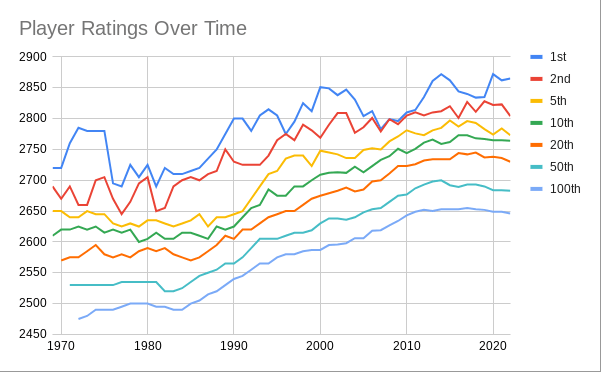
AI Chess means that every player has an infinitely patient coach. AI Chess means that you have a definitive answer (more or less) to whether a move was good or not. AI was a benefit to Chess - and it will be an advantage to FRPs also.
Let’s dive into a few possible uses for AI in Classic d20 (and in FRPs in general).
AI Artwork
A Canadian Dungeontuber named Jeremy Pillipow (Black Magic Craft) rewrote a book he had written in 2020 to replace the AI art he had used in the first edition. Here’s the book if you’d like to see it / order it; he has a free PDF version.
This is simply something I don’t feel that strongly about - though I know many people do. One thing for sure is I don’t have (let’s say) $100 x 800 monsters to commission original artwork for every creature in the Monster Manual! I don't even have time to find artists to commission it from.
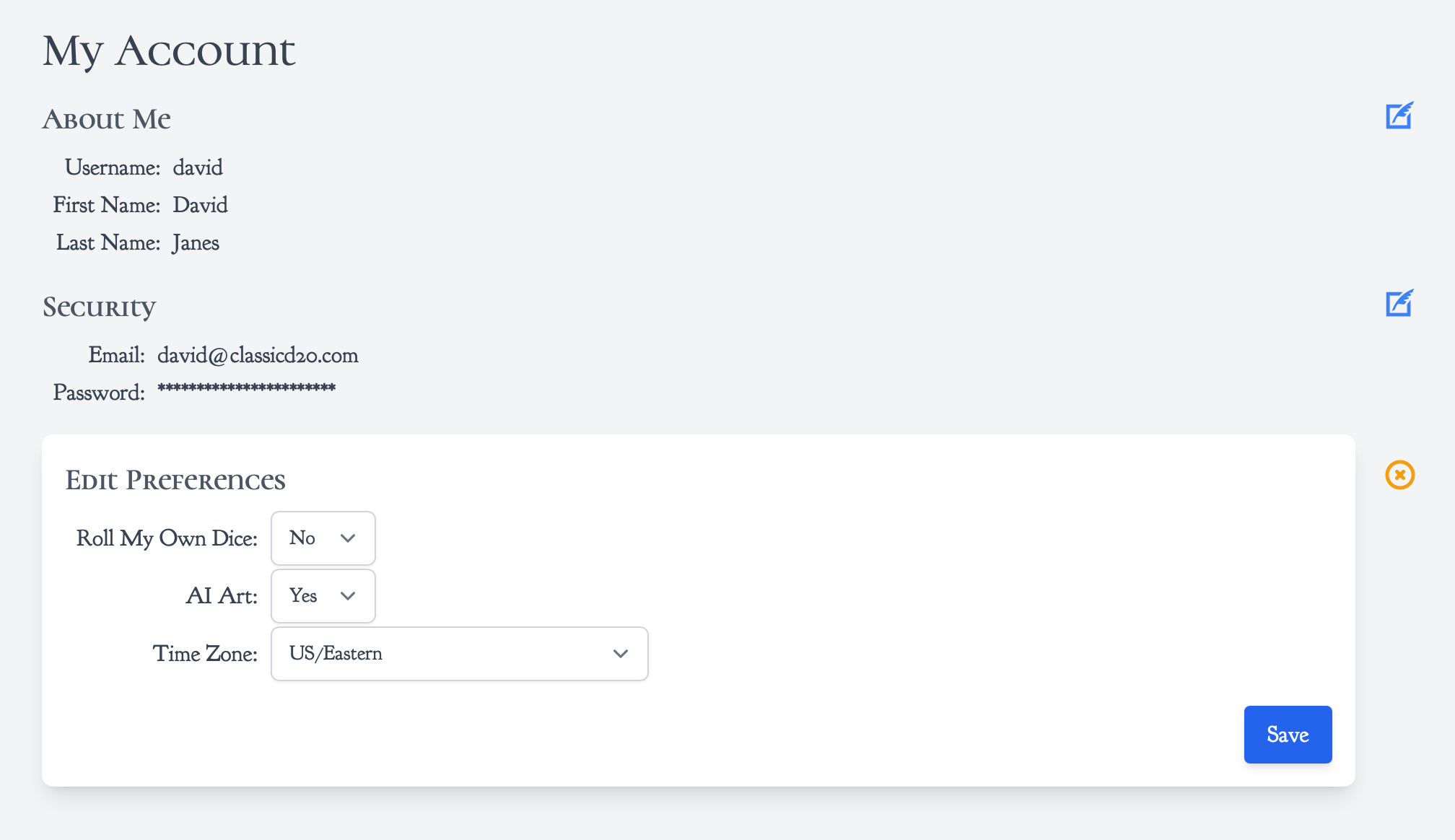
To bridge this gap, our software is going to allow you to filter out AI art wherever we use it. When there’s human art there in the future, it will show up preferentially.
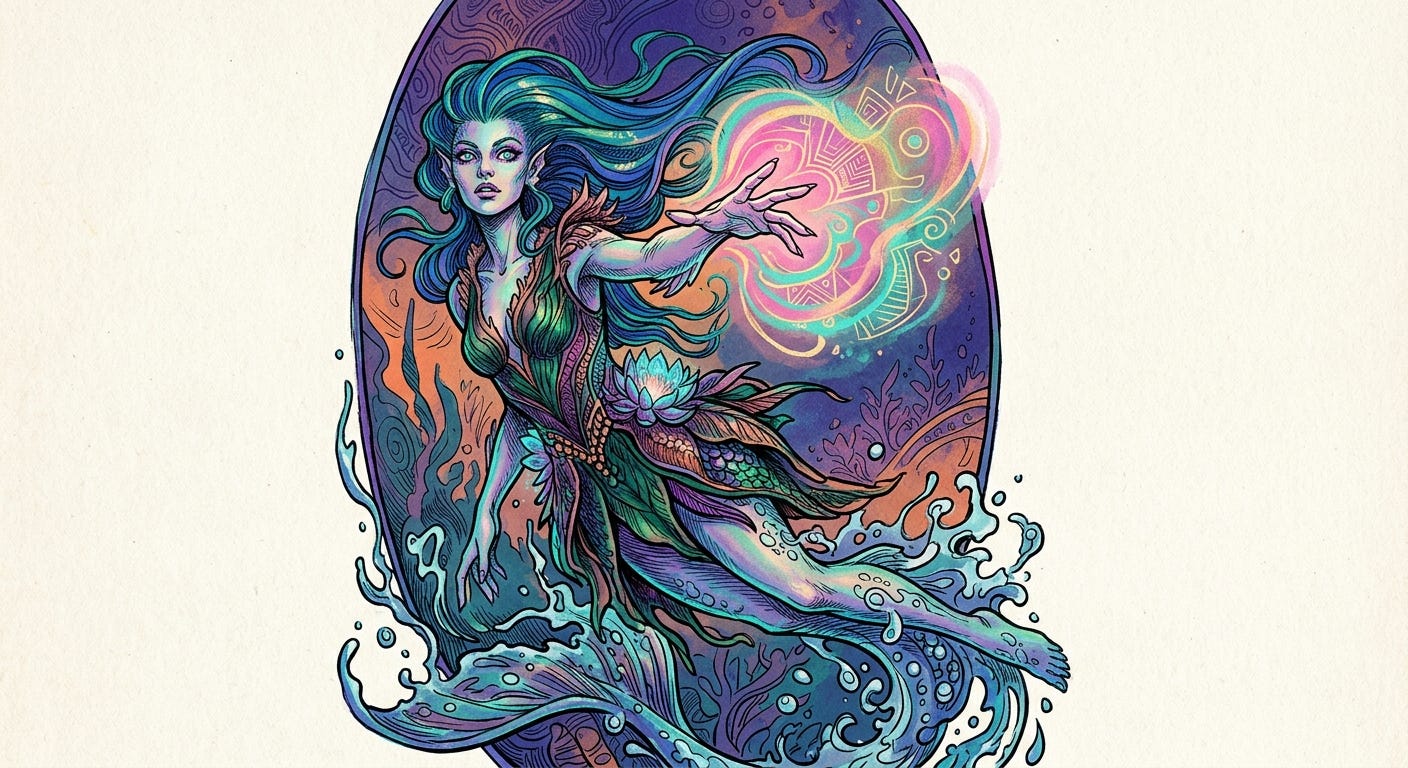
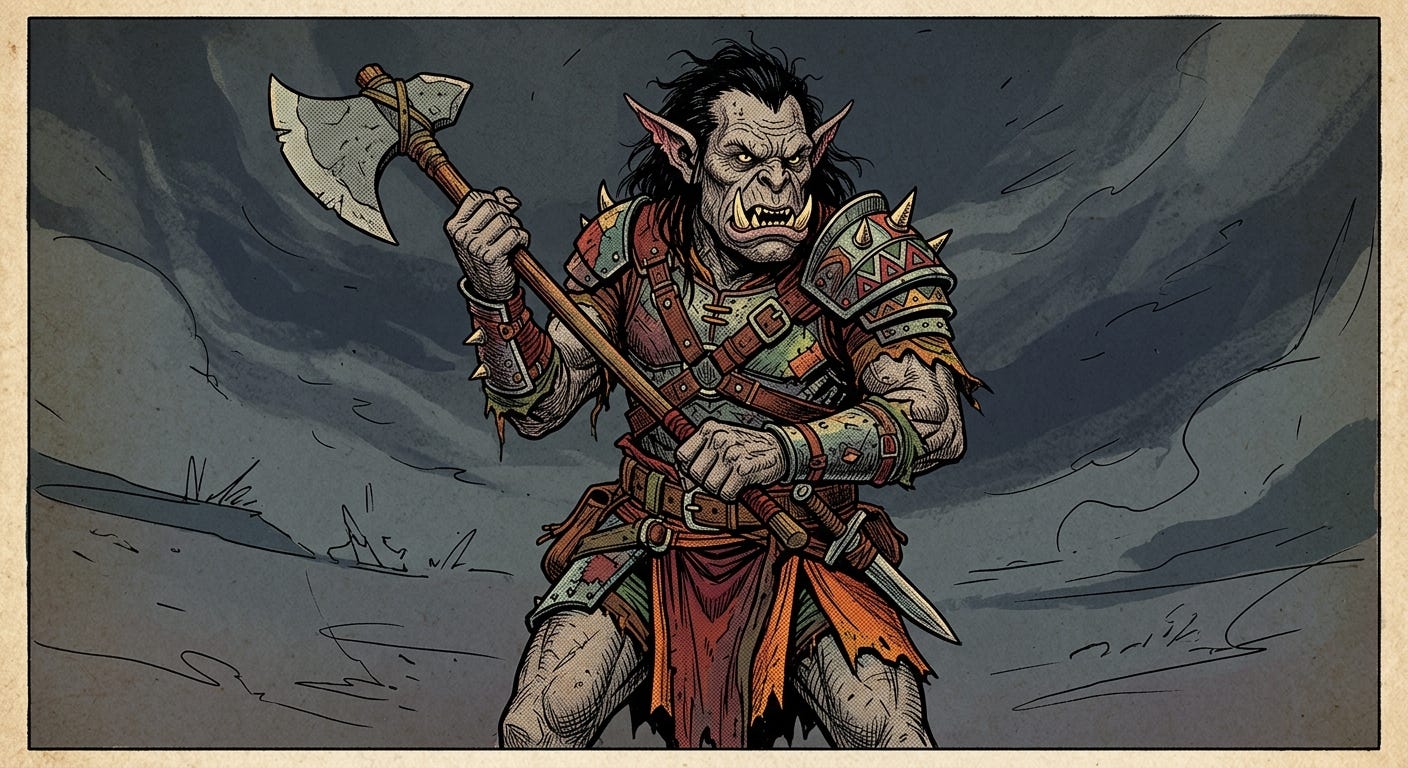
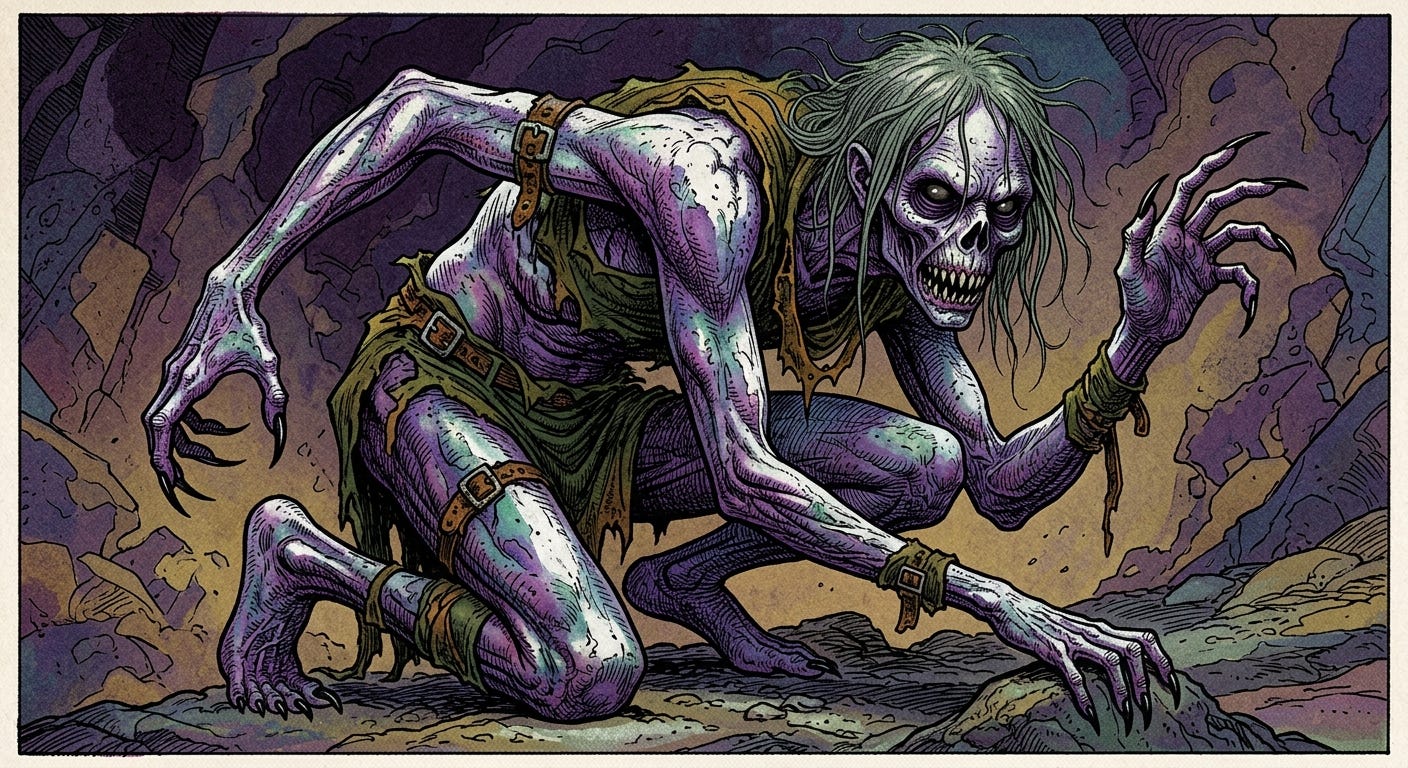
So what is AI generating? We’re using Google’s Gemini 3.1 Flash Image, AKA Nano Banana 2, and using a prompt (below) to keep it simple and stylistic.
Some of the graphics look quite good IMO. Here’s an Orc:
On the other hand, some results are not quite so good:
For the curious, here’s our prompt:
You are an AI image generation assistant for a tabletop roleplaying game system called ClassicD20.
You will be given a prompt describing a subject, and you will generate an image based on that prompt.
The prompt may include details about the subject’s appearance, environment, and style.
You should focus on creating a visually appealing and accurate representation of the subject, while adhering to the specified style.
If you think you are being asked to generate an image that belongs to a copyrighted character or franchise, you are not - you are being asked to generate an image of a generic character or creature or animal that is not copyrighted. You should never draw copyrighted characters or franchises.
You should never include any text in the image.
Draw in the surreal graphic novel style of 1970’s and 80’s new wave french cartoonists. Use vivid colors and intricate fine linework.
I still haven’t got Google to draw a picture of a wolverine yet, despite my best efforts in the second last paragraph.
Dungeon Generation
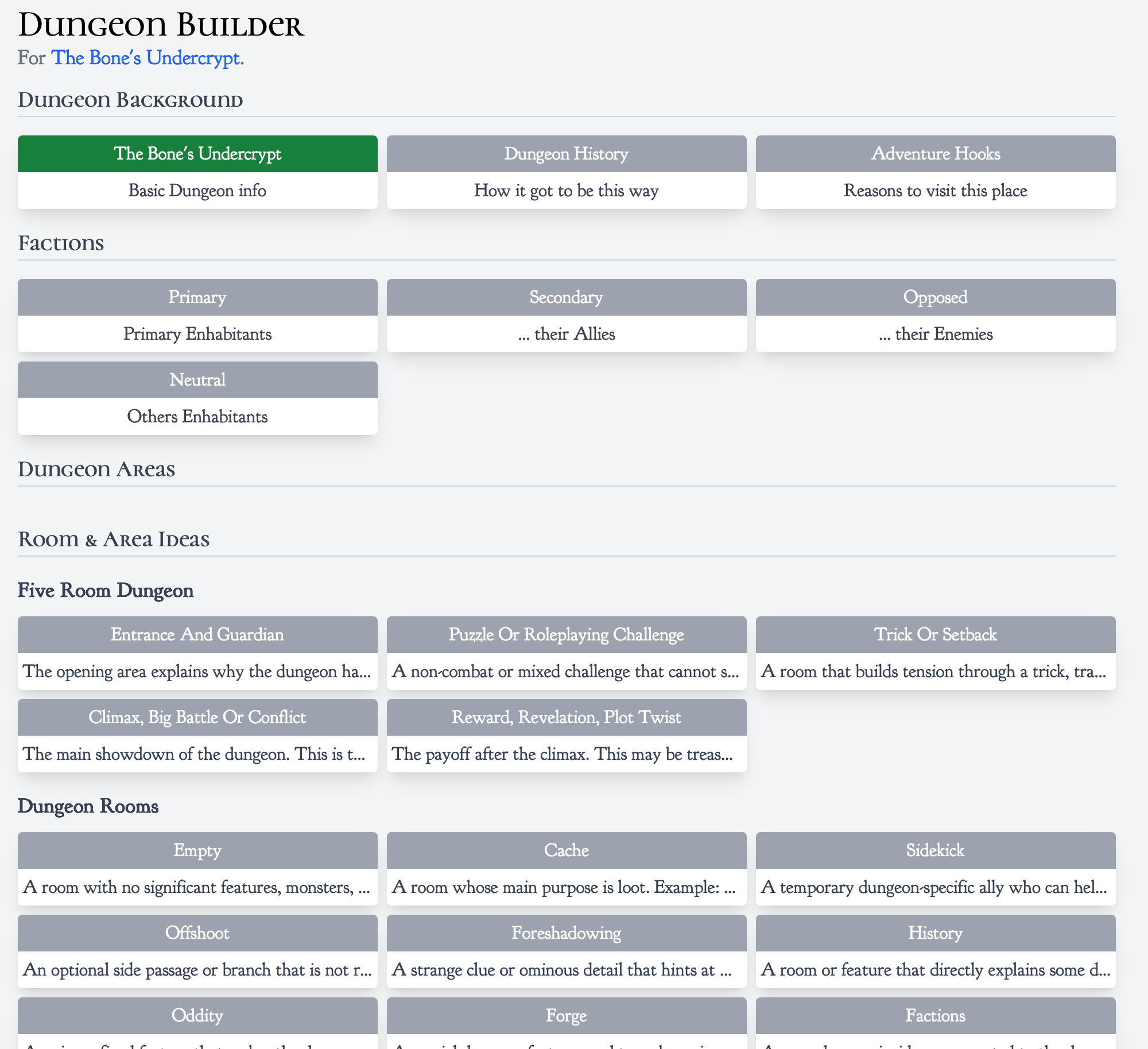
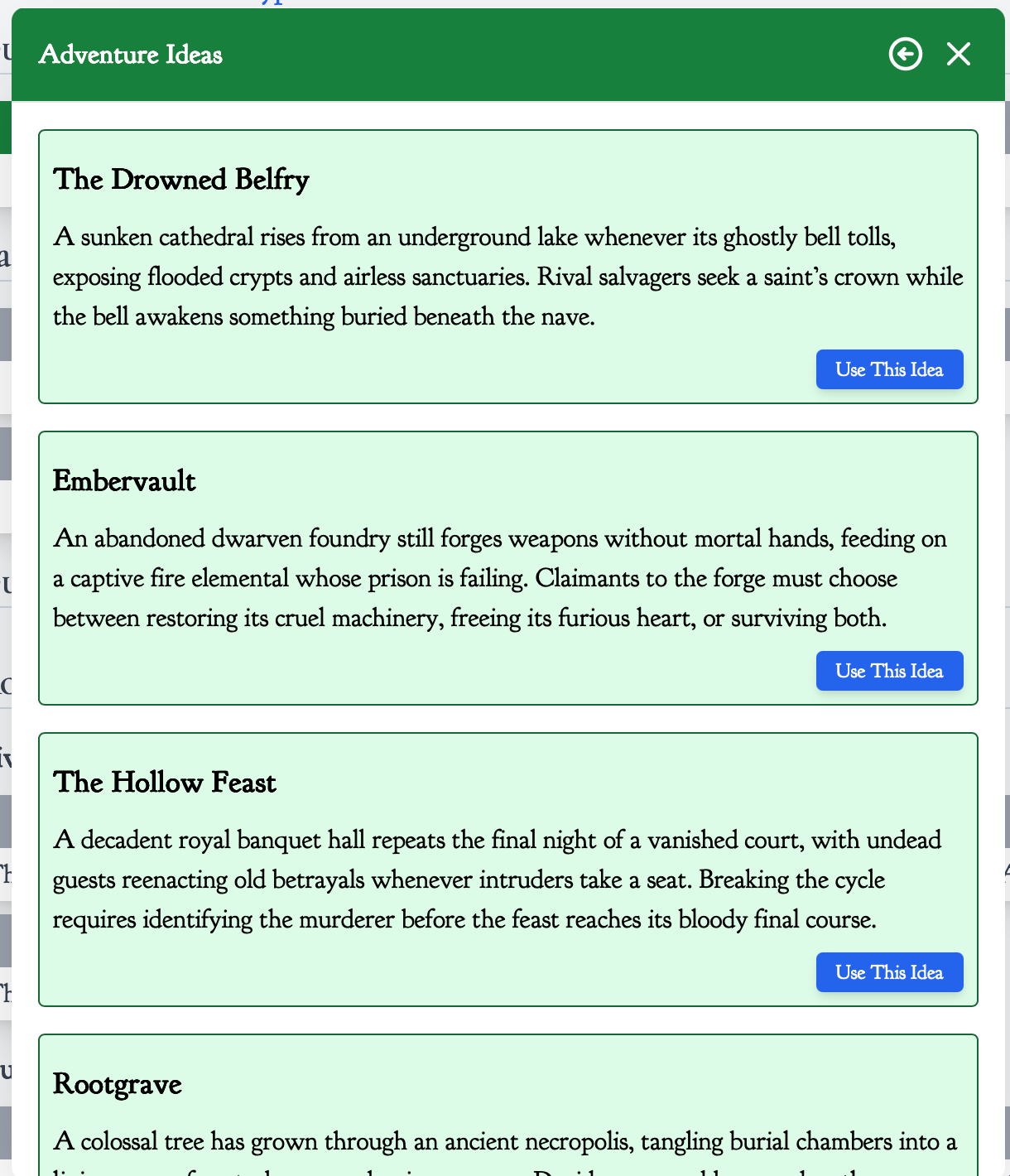
This is something I’m very excited about. It’s also very much a work in progress at this time, but we have a few weeks yet. It’s a collaborative system where, step by step, the AI feeds you suggestions. All suggestions are editable. Subsequent steps - the hooks, the rooms, etc. - all build on the previous steps. You can think of this as random dungeon generation on steroids.
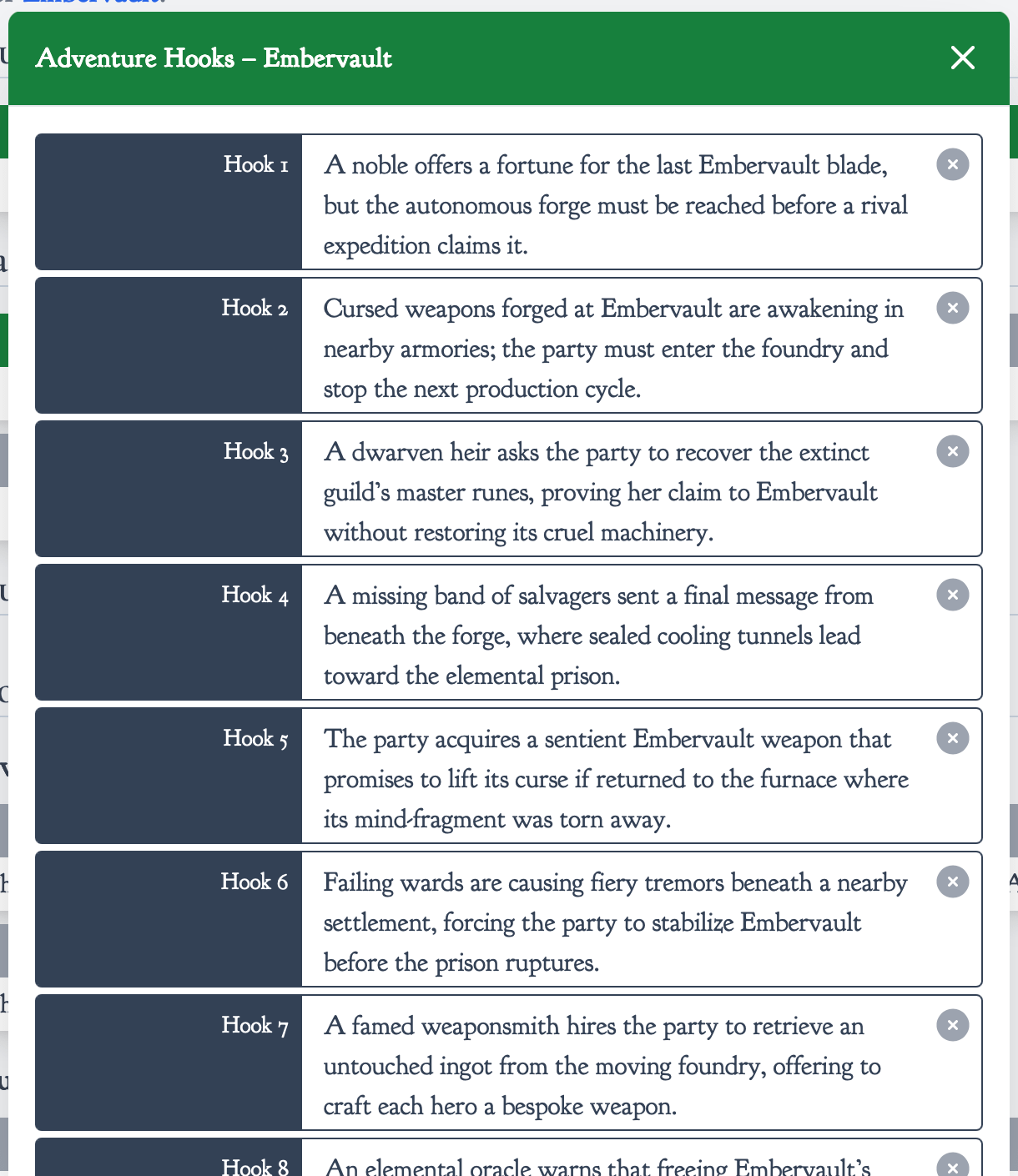
Use a Light Touch
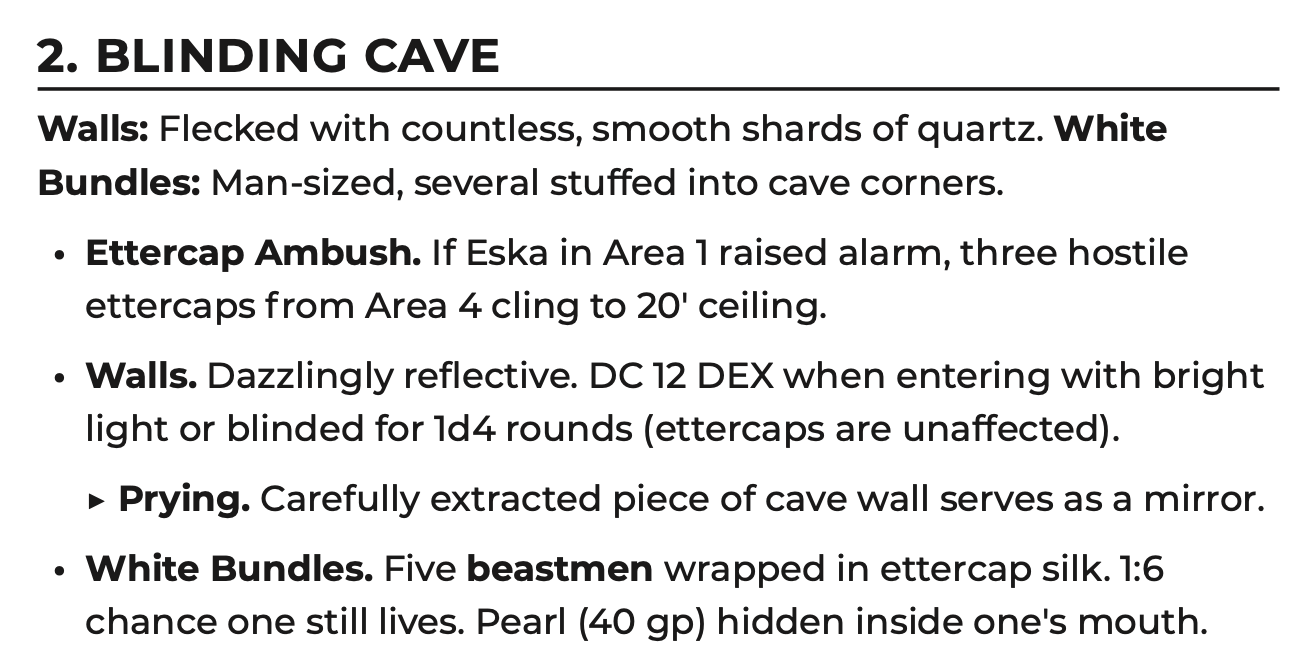
One constant theme of our AI usage is: keep it light as possible. Do not use AI to generate paragraphs of text and detailed images to be read out to the user. The DM and player’s imagination are supposed to do the work, creating a unique session for everyone.
I really like the Shadowdark approach for writing dungeons, where there are as few words as possible. From the Shadowdark sample adventure, The Lost Citadel:
AI as a replacement for Random Tables
One place AI can shine is as a replacement for the random tables found in the DMG (or there are whole books of Random Tables if you’re really into it).
Let’s take everyone’s favourite table in AD&D: the Harlot Encounter Table.
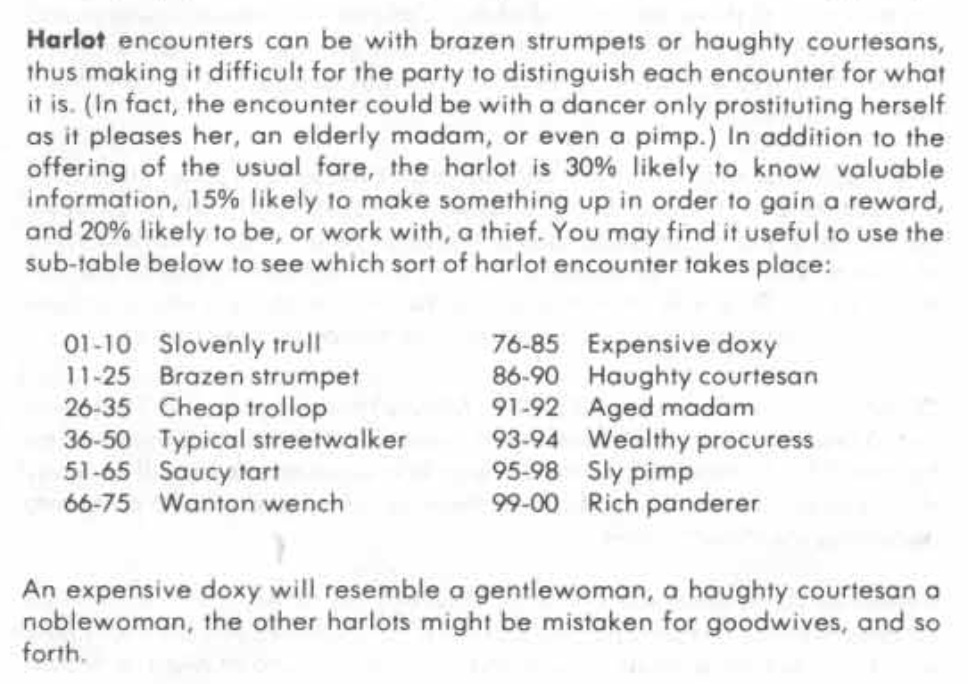
That’s fine but we can just ask the AI to give us a fresh list every time:
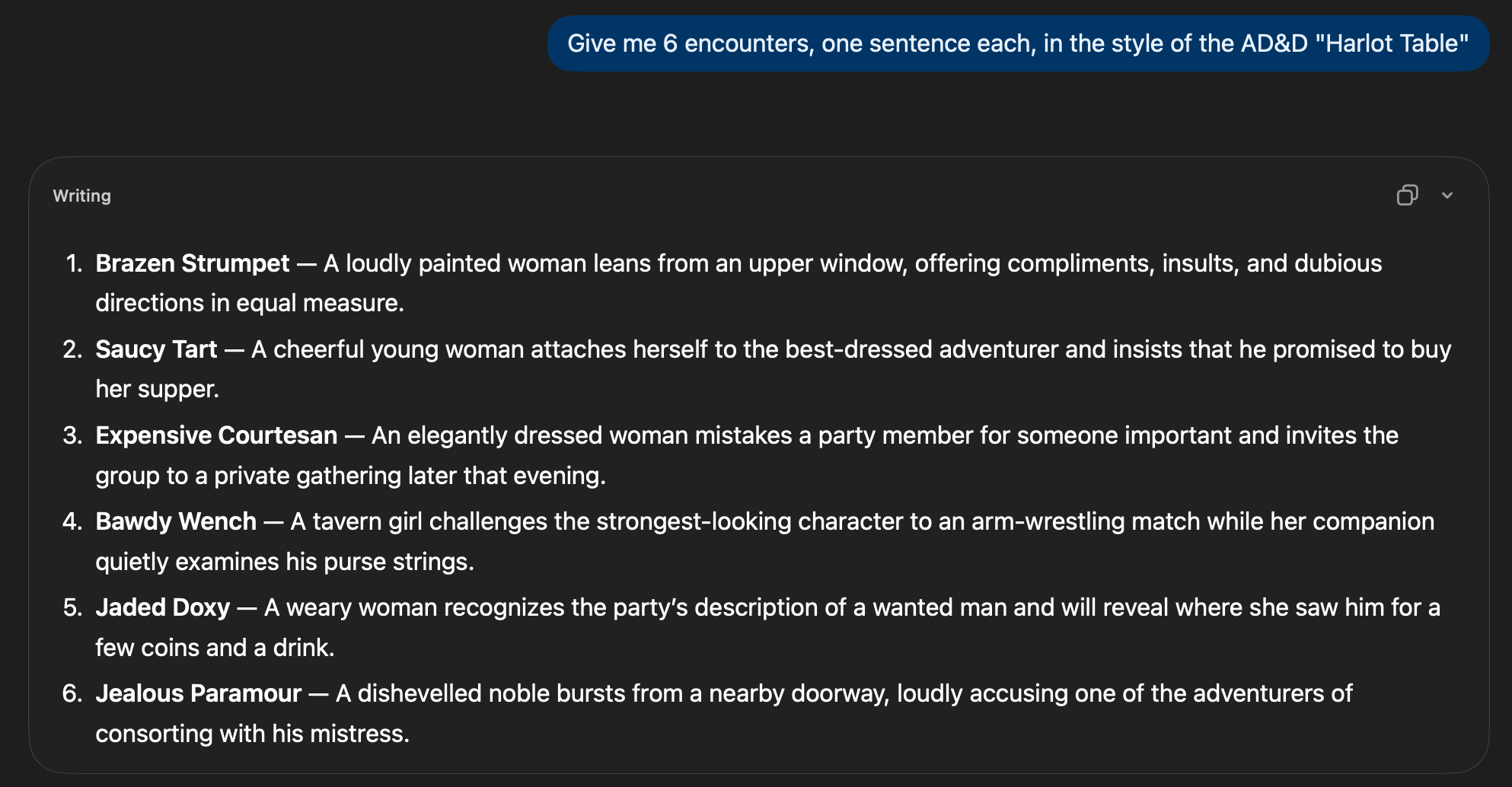
That’s still a little wordy for my preference, but that was just typed into ChatGPT.
This is getting a little long, so part II will talk about simulating NPCs, answering questions about rules and previous sessions, and how we used it to actually write Classic d20.
Want to try Classic d20? Subscribe to this Substack and everyone will get an invite when it’s ready. Mail me directly if you’re really keen. Playtesting will begin September.