

But this clearly isn’t true - people have been trying to fix AD&D for the last ~50 years! Obviously there’s some itch there to be scratched, and we’re all here to scratch it.
My response was that while the heart of the rules is the right place, but because of the verbose way they are written, because they are spread over several sections and because of inconsistent naming, many rules bring the game to a dead stop when they are needed.
Let’s take “Turn Undead”. Here are the rules (sorry for the length):
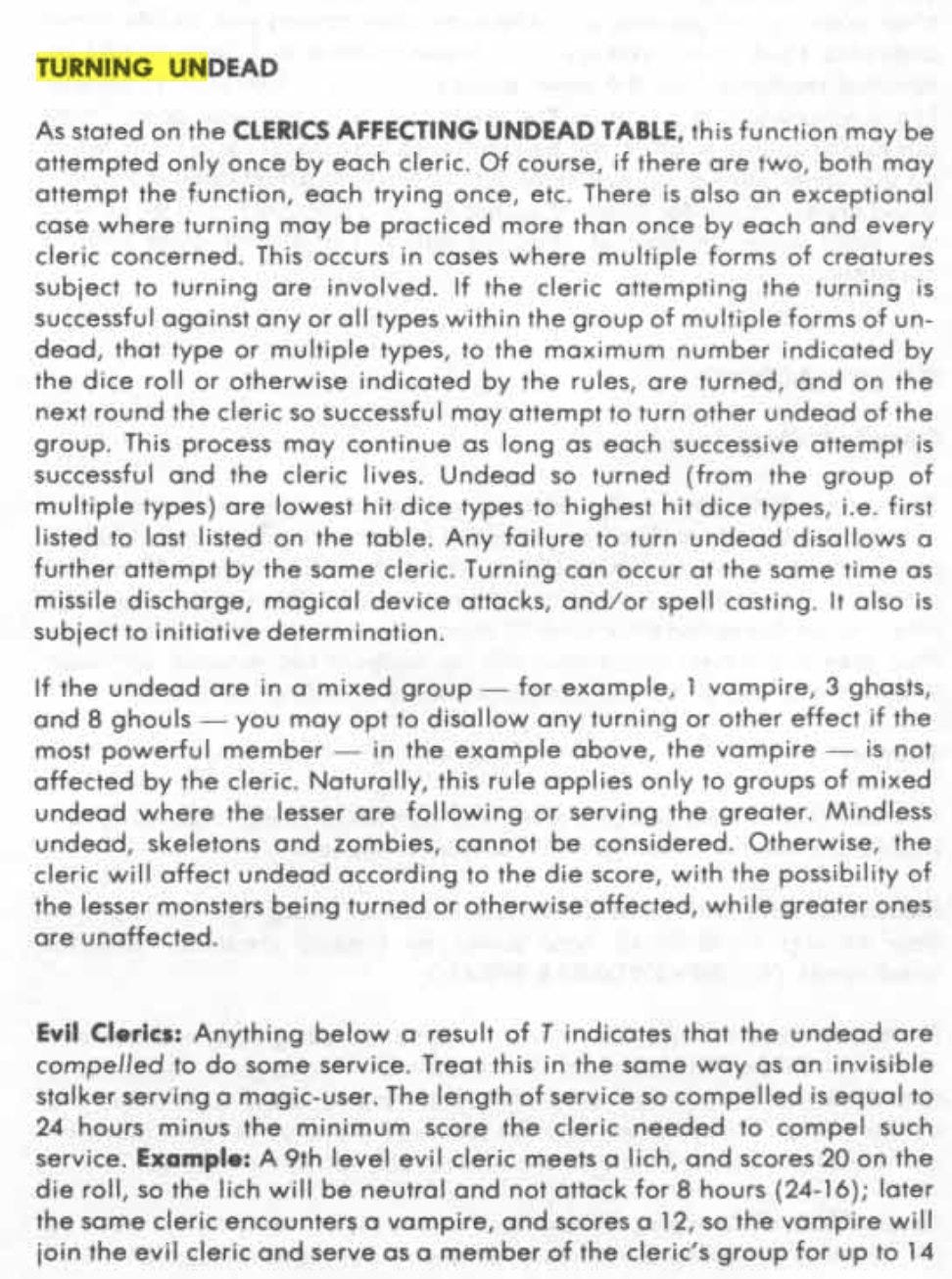
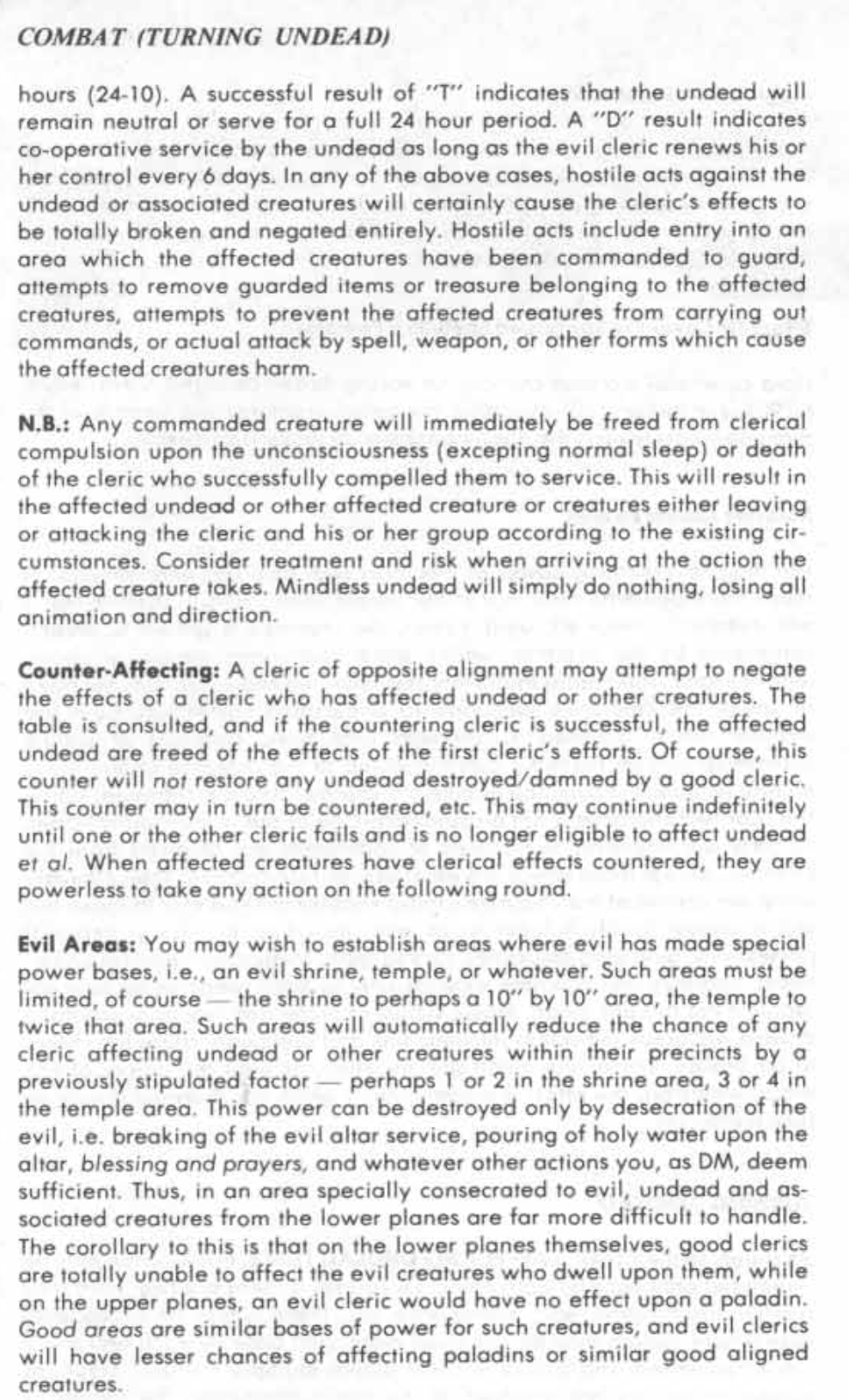
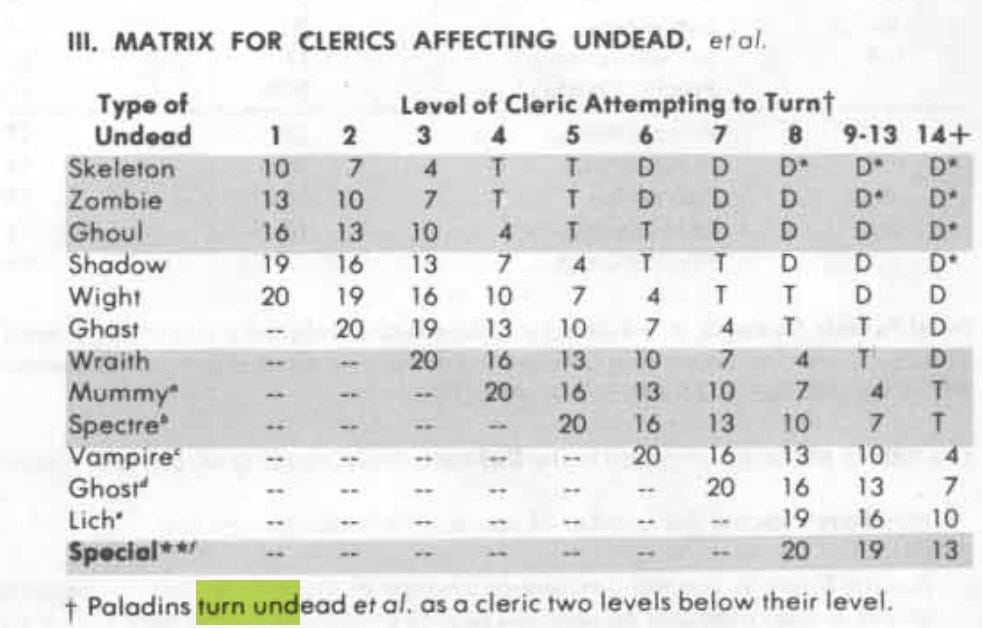
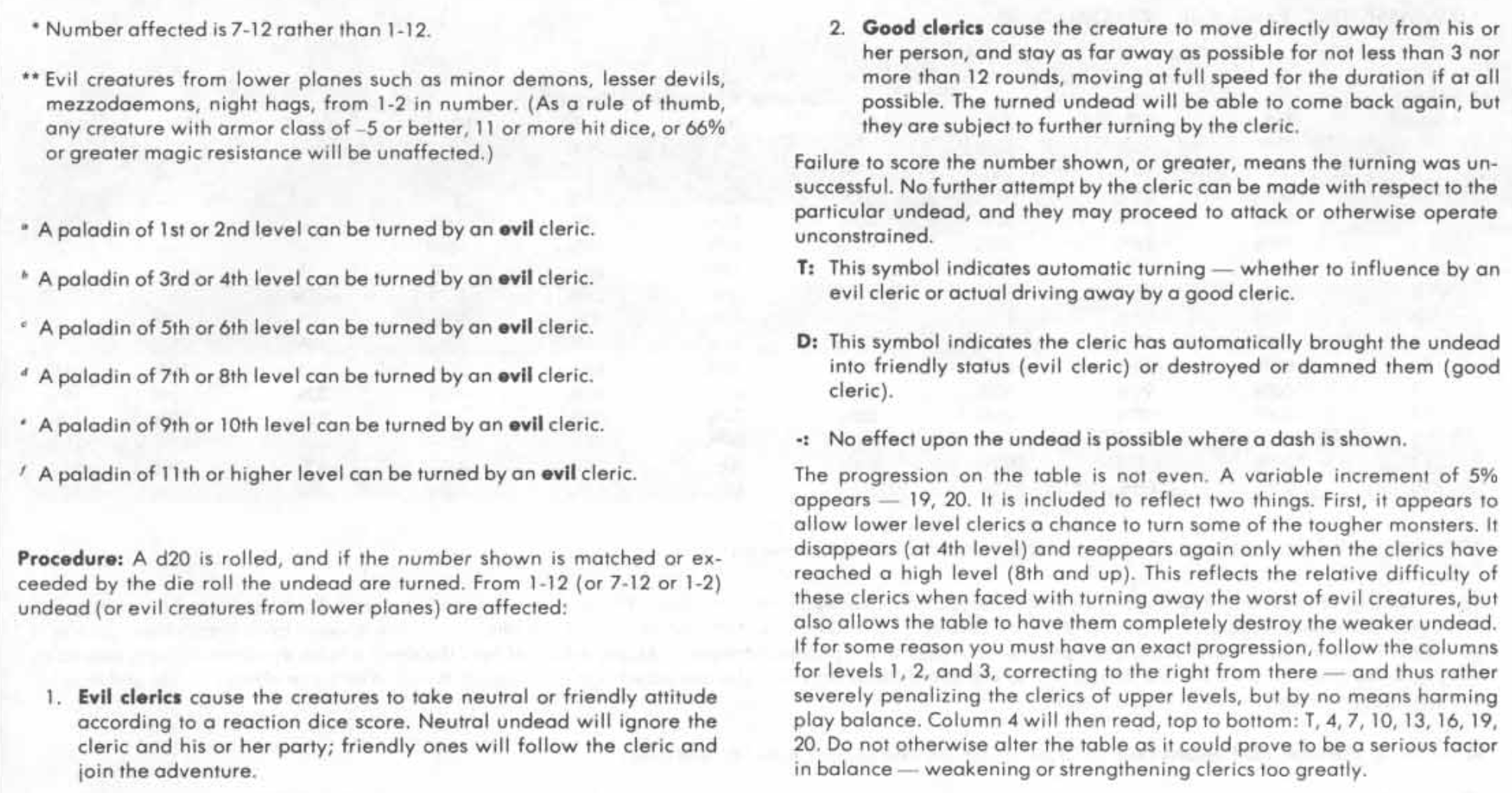
I’m using this specific example because it came up a few weeks ago in a game I’m playing in. (“Matrix for Clerics Affecting Undead, et al” wasn’t the most natural thing to think of when looking for this table). Most of us have been playing since the 1970s, but it’s not like D&D is our lives - we play for fun, in a split online / in person session every other week or so. And I’m also interested in this because Classic d20 has not solved this (yet), but as always, I’m trying to get AD&D feel with d20 mechanics.
An X user named The Dungeon Delver says this is quite simply:
Roll a d20.
Look at the chart.
At or over = turned for 3d4 rounds.
Below = not turned, can never be turned again.
Which is basically it! But then why not just have a section called “Turn Undead” and those four lines?
Here are the 3.5 SRD Turn or Rebuke Undead rules: no real improvement, but it is a d20 mechanic.
What’s the mechanism in Classic d20 going to be? It was open up to discussion, but now I think:
Make a Cleric Level Check + CHA modifier.
Compare to the Turn DC of the monster.
A Level Check is just roll a d20 and add your Cleric Level. Things to be decided and probable answers in italics:
How many are affected? All that are looking at the Cleric or within 60 feet.
How long? 3d4 minutes.
what’s the mechanism for Destroying them? Undecided.
Natural 20s? Will always work, but never Destroy.
Your comments are always welcome. This is a web-only post, you shouldn’t have got an email (I hope!). Normal posting will resume on Wednesday.